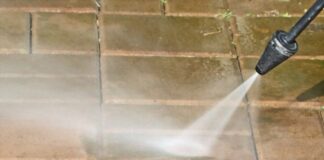

Spring is finally here, and that means you want to go out and start enjoying your garden again. What’s better than sitting out on the patio with a good book or a drink or two? That’s not going to be that inviting though, if your patio is starting to look grimy. Luckily, there are three different ways you can clean that patio off and get it sparkling clean again. Here’s how you can clean it off, ready for the warmer months.
How Often Should You Clean Your Patio?
You’ll see that your patio does need cleaning over time, as there are plenty of things that can build up on it. Dust and dirt will accumulate, as well as debris such as leaves, and even moss. Do you need to clean the patio regularly to get everything off?
The great thing about patios is that they don’t need regular cleaning, as decks do. In fact, you only need to clean them once a year to get them looking their best again. That’s why spring is the best time to do so, as you’ll be ready to start using it again. Once it’s clean, you can enjoy it to its fullest.
Before You Clean Your Patio
Before you get to cleaning, you’ll want to deal with any weeds that have taken up residence on the patio. As careful as you are, they have a bad habit of getting into the cracks between the paving stones. You’ll want to remove these first, so you can thoroughly clean.
There are lots of different ways you can remove weeds, so you’ll want to find one that suits you best. Many choose to use weeding tools that allow them to dig under the weeds, while pulling them out from the top. Others like home-made methods, such as boiling water or baking soda, that allow them to kill the weeds off. Weed burners are another good option, that allow you to burn weeds directly to kill them.
Whichever method you use, remember that some can stain your patio. Weedkillers, for example, will actually stain the paving slabs, so be careful. This is why home-made methods are usually preferred for this task.
However you choose to deal with weeds, you’ll need to ensure to kill the roots or they will simply grow back. Even if you are meticulous about it, you’ll find weeds coming back after a while. It’s a good idea to tackle them weekly, so you can remove them before they really take root.
Another way to prevent weeds is to use polymeric sand. This sand is great for blocking up the joints between the paving stones, and has two uses. Firstly, it’ll stop weeds from growing, and it will also stop bugs from making their way into the house. It’s well worth trying on your patio.
Check What Paving Stones You Have
Before cleaning, you’ll also need to check what kind of paving stones you have. You want to use the right cleaning method on the right surface, as some methods are harsher than others.
Natural paving stones, for example, can take a lot of staining from foot traffic and general use. You want a cleaner that will get these stains up, but not damage the surface of the stone. Also keep in mind that the stone will naturally have some discolouration, so you shouldn’t worry about getting everything back to a uniform colour.
Three Different Ways To Clean Your Patio
Ready to get cleaning? Then you’ll need to know the three different ways to get it clean. The method you use will depend on how dirty your patio is, and the style of patio slabs that you have.
You’ll have seen lots of different cleaning products on the market, and you’d think that one of them would be the right product to use. In fact, you don’t need to pick up a specialised cleaner at all. Any of these three methods will get stains up off your patio without you having to buy anything new.
Let’s cover these methods and see how they work. Which one is right for your patio?
Method One: Soap And Water
This first method is great as it’s actually one of the easiest ones out there. Even better, you hardly need anything to get started. You’ll need:
- A bucket
- Warm water
- A sponge or hard bristled brush
- Washing up liquid
You’ll most likely have all these things to hand, so this is the best method to start with. To clean the patio, simply squirt some washing up liquid into the bucket, and fill it up with warm water. Now you have enough water to get started with.
Start from the corners of the patio, splashing some water on it and giving it a scrub. As you do this, you’ll see the dirt coming up and away as you go. When you do this, it’s important that you scrub diagonally. This is because it’s much easier on the jointing compound between the slabs. If you scrub diagonally rather than straight across, less of the compound will come out.
Keep going like this until you’ve scrubbed the entire patio. Once you have, you’re ready to rinse it all off with clean water. Use a hose or a bucket of clean water to rinse all the suds away into a drainage point.
Once you’ve rinsed, check those joints. If any compound has come out, you’ll need to replace it.
Let the patio dry off, then replace the furniture and you’re ready to go.
Method Two: White Vinegar
This method is perfect for two different reasons. Firstly, it’s excellent for getting stubborn stains out of your patio if you have any. Plus, it’s totally environmentally friendly. If you’re worried about the products you’re using in your garden, then this is what you’re looking for. The best part is that it’s readily available in most supermarkets, so you’ll be able to grab a bottle in no time.
You’ll need the following things to clean your patio using this method:
- White vinegar
- Warm water
- Bucket
- Hard bristled brush
This method is very similar to method one, so you’ll see it’s easy to do. Mix up the vinegar and water in a 1:1 ratio, to get the right amount of cleaning power. If those stains are very persistent though, you may want to add a little more vinegar to get what you need.
Pour this solution over your patio, and let it sit for around 30 minutes to an hour. That will give the vinegar plenty of time to get to work. Once you’ve done that, you’ll be able to then scrub the vinegar away using the soapy water method.
You’ll see that even the worst stains can come up with this method, and it doesn’t take a lot of extra effort on your part. Do be aware though, you can’t use this method on limestone pavers, as the vinegar can actually damage the surface of them.
Method Three: Pressure Washing
Have you used the above two methods, and there’s still stains on your patio? Maybe it’s been left for a few years, and it’s really showing its neglect. If this is the case, then you may want to use a pressure washer to get that dirt up.
A pressure washer uses a powerful stream of cold water to pull dirt up and wash it away. However, as it’s so powerful it can actually cause damage to the pavers if you’re not careful. You shouldn’t use this method unless the other two methods haven’t given you the results that you were looking for.
To use this method, you’ll need:
- Pressure washer
- Garden hose
- Pressure washer detergent
- Washing up liquid
Firstly, plug in the pressure washer and attach it to the hose. Then, dilute your pressure washer detergent and fill up the chamber in your pressure washer, according to the instructions they give you. You have the option of using washing up liquid, if you don’t have a pressure washing detergent.
Then, you’ll start washing in much the same way. Stand in the top corner, and spray the water at a 30 degree angle. Spray diagonally across the patio, again to avoid damaging the jointing compound more than you need to. Also, ensure that you don’t stand too close to the patio, in order to avoid damaging it.
Once you’re done, ensure all water is washed away, and then let the patio dry. Move your patio furniture back into place once you’re done, and you’ll be ready to go.
Maintaining A Clean Patio
Once you’ve cleaned off your patio, you’ll want to keep it as clean as possible. Luckily, again it’s very easy for you to do that throughout the year. In the spring and summer, you’ll want to do your deep clean before you start using it again. It’s a good idea as things like moss can make it slippery, so you’ll want to deal with that first.
Throughout the year, you’ll want to sweep it regularly to remove any debris that settles on it. That’s especially true in the autumn, as leaves will be falling from the trees. These can easily stain the patio, so you want to remove them as soon as possible. Do this when you rake up leaves from your lawn, and you shouldn’t have much of a problem.
As you use your patio, make sure you clean up any spillages as soon as they happen. This is just the same as you would indoors. The longer you let a spillage sit, the more likely it is to set.
In the winter, you’ll be looking to use de-icing materials to make the patio safe to walk on. After all, no one wants to slip on it. Some will use salt to do this, but this should be avoided as the salt can stain pavers. Find another product instead to avoid this.
Finally, if you want to make your work easier you can add paving stone sealant to keep the worst stains at bay. This is something that’s worth considering if you have had the patio recently installed. Remember though, if you seal the patio that sealant will not come off again. You’ll need to be totally certain that you want it before you apply it.
How To Repoint Your Patio
Has some of the jointing compound come away as you were cleaning the patio? That isn’t a problem. You can repoint it, sealing the gaps again and making it secure. This should help with weeds, too.
You don’t need to worry about repointing a patio in the same way as you’d repoint a brick wall. Brick pointing is designed to go hard quickly, so you’ve got to be fast and accurate. It isn’t the same when you’re working on your patio. It’s more flexible, so you shouldn’t have much trouble with it.
Once the patio is clean, get into the joints to ensure that they’re totally clean. If you’ve been using a pressure washer, you can use this to blast out any dirt. A chisel will work just as well, too.
Once those joints are clean, you’ll want to mix up your jointing compound. In most cases, you’ll want to use silver sand with cement in a 1:1 mix. The sand should be spread over the cracks and brushed into them, filling them up. That crack has to be totally full, to avoid any air bubbles sitting underneath and causing more problems.
Once you’ve done this, brush any excess off the patio and then leave it to set. The moisture in the air will be enough to get the jointing to harden.